
Niet gecategoriseerd
Striving for sustainability or regeneration?
The story of rebellious Simone
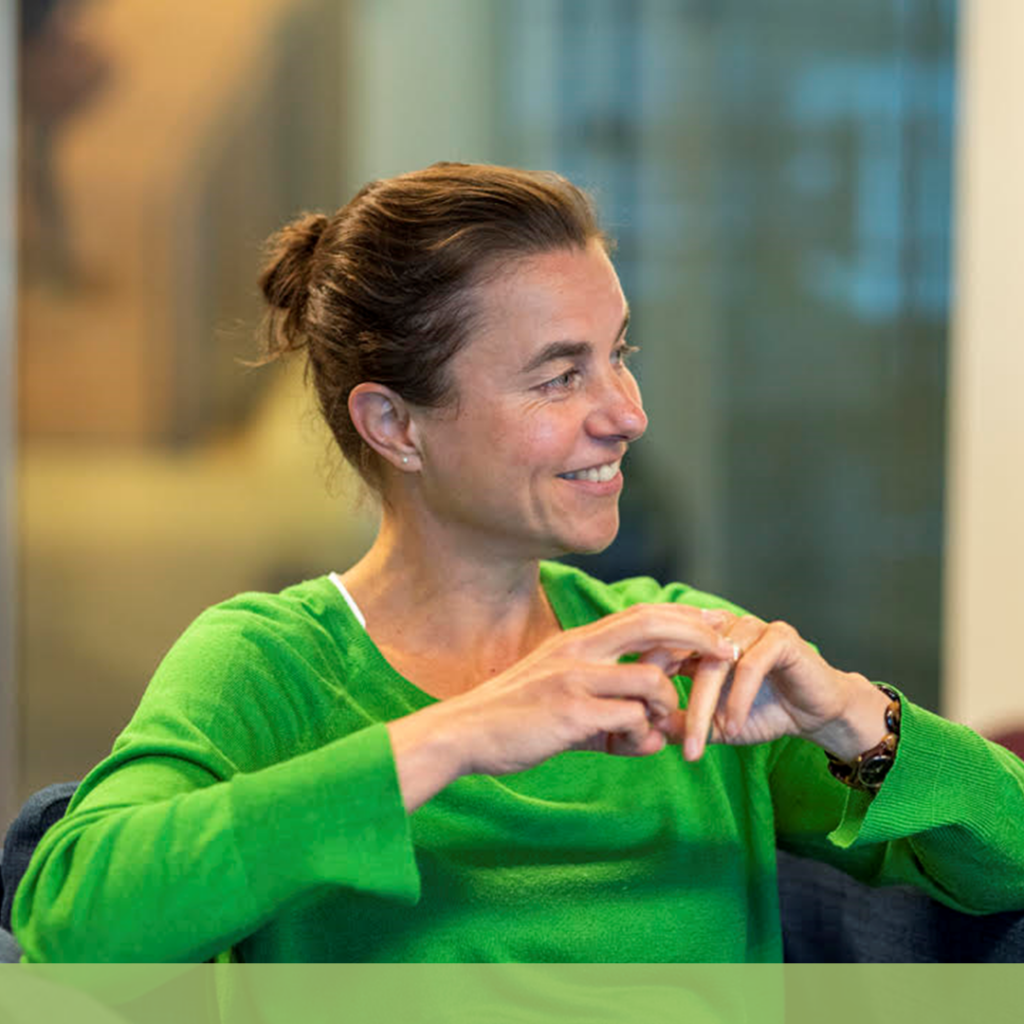
Simone van Neerven is an entrepreneur, and not just any entrepreneur; she’s an innovation expert on a mission to be an international catalyst for change. She does this by making full use of her own rebelliousness and versatility in everything she takes on. For example as founder of Rebella, as an author of books, as a columnist for MT Sprout, as a champion of regenerative agriculture and even as a sparring partner. This week we dive into her fascinating story.
An unshakeable belief in the importance of regenerative systems
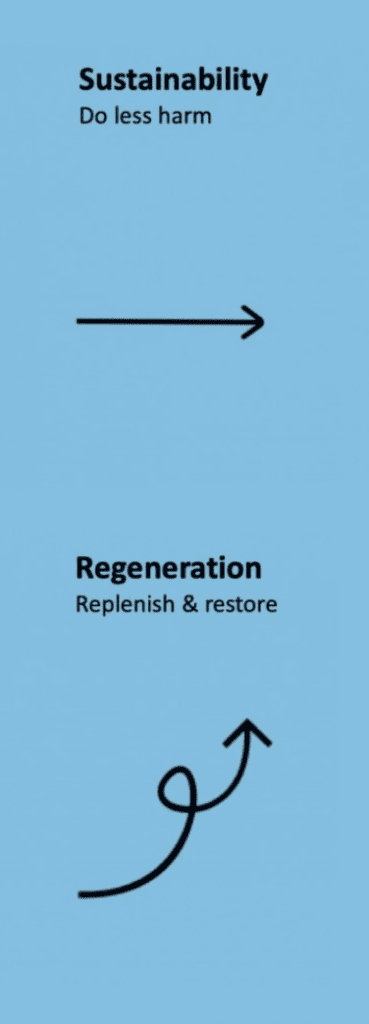
You come across the words ‘sustainability’ and its Dutch equivalent ‘duurzaamheid’ a lot on the internet. Search for ‘sustainability’ and you get around 2,140,000,000 Google results; for ‘duurzaamheid’, 55,600,000. However, Simone feels that these widely used words don’t fully capture what we need to do as a society. We shouldn’t just ensure a system between people, the environment and the economy that focuses on preserving nature or the planet. We need to go further than that: create a new system in which the dynamics between people, the environment and the economy lead to the (re)building or continuous improvement of nature or the planet. Her suggestion: let’s all start talking more about ‘regenereren’ or ‘regeneration’. For now, those words get around 189,000 and 282,000,000 Google results, so they still have quite a way to go before they knock the others off the throne. Simone firmly believes in creating regenerative systems. But why? She isn’t doing it to secure a future. She has no children to leave anything to. Her inner rebel simply can’t stand by and watch the problems with the current system, driven by a deep-rooted urge not to be part of the problem, but part of the solution.
Creating a healthy environment again
Stress and burnout complaints among the Dutch population remain high, and they’re expected to keep rising due to demographic developments in the most vulnerable groups. Simone has seen a lot of it around her, too. People developing complaints because they’ve become completely disconnected from who they are. That’s why she’s working with businesses and sheltered workshops to solve the question: “How can we create a (work) environment in which people stay really close to themselves?”
Another question on her mind is: ‘How can we make the soil healthy again, so that the environment we live in and our food become healthier too?’ According to her, the answer lies in regenerative agriculture. When she talks about it, something happens. Her eyes light up even more. She has even adapted her business model so she can work with farmers on a non-profit basis to develop and share knowledge about regenerative agriculture.
A sustainable lifestyle means weighing up convenience & impact
There’s a lot of attention on the role governments and businesses need to play in becoming more sustainable, and very little on the role consumers need to take on. What trade-offs do entrepreneurs with a heart for sustainability make as consumers? Which sustainable products or services do they buy? Do they also buy sustainable clothing or sustainable gifts, for example? In short, how do they strike the balance as consumers when it comes to making a positive social, environmental and financial impact?
Simone definitely has a sustainable lifestyle. “I don’t eat meat. I don’t have a car; I’ve never had one and never will. I never buy clothes, because they don’t mean much to me. I don’t buy much online either. If I need something, I just walk to a shop. I prefer that, because then I know for sure I’ll use what I buy, instead of it ending up in a cycle of returns. I try to eat a lot of organic food, but that isn’t always possible, or everywhere. And maybe it’s a no-go subject, but I still want to mention it: I don’t have children. I do still fly. Nowhere near as excessively as I once did, but then I often immediately get criticised for it not being sustainable.”
Convenience is what holds her back from changing her travel habits even further. “Sometimes convenience also makes something else possible. I also take on assignments abroad, and I have to travel for those. But those assignments pay well, which allows me to make other things possible in the Netherlands that pay less but do have a sustainable impact. So there’s a trade-off. Of course, I could say ‘no’, but then I couldn’t do the other things either.”
Sustainable entrepreneurship is hard and takes guts, curiosity & funding
“To be a sustainable entrepreneur, you need guts,” says Simone. “To just go ahead and do it anyway, even though you’ve never done it before and don’t know how, because you feel it has to happen. And that in a world that demands you always have an answer ready before you start anything.” For a column, she took a deep dive into two remarkable entrepreneurs: Lex Hoefsloot, co-founder and CEO of Lightyear, and Boyan Slat, founder and CEO of The Ocean Clean-up. “When you dig into their stories, they have a lot in common. They follow their curiosity, not a passion. They want to make an impact, but at the start their goal isn’t actually very clear-cut. Everyone says, ‘What you want simply isn’t possible.’ And every time they just keep going, follow their curiosity, just get on with it and stay very flexible and creative in finding solutions to the many problems they run into.” Bringing about change is hard by definition, because there’s always a lot of pushback, for example within organisations and from mindsets. With sustainable entrepreneurship, on top of that, you often have to change the whole system. So it doesn’t mean you can change one little thing in the chain, process or resources and leave everything else as it is. To make sure you make the right change, you have to design an entirely new system or chain and find a solution for all the pushback you encounter. In addition, there are many unexplored areas when it comes to ‘sustainability’ or ‘regeneration’. And they come with lots of unanswered questions that require a big investment of both time and money, and don’t always have an existing market. That’s why the start-up phase can be long and tough. A sustainable entrepreneur is often not out to get rich, but he or she does need to make a living. So one challenge is: ‘How do you find the right funding?’
Different challenges in ‘building sustainability in’ vs. ‘building from sustainability’
“I don’t think the difference lies so much in the size of a company. After all, every big company started small. But there is a difference in the challenges between companies that have built themselves up from sustainability and companies that are trying to build sustainability in. I seriously wonder whether large organisations that don’t already have ‘sustainability’ in their DNA will ever get it into their DNA. Because there are so many other things in their DNA that they have to weigh up whenever they make a choice. Say, for example, you’re a dividend-driven organisation. Do you dare, and are you able, to make a choice at the expense of the highest return? So a lower return, but better for the world. The top of a company can genuinely want it, but if they aren’t able to stand up to conflicting interests, it’s simply not going to happen. What gives me a lot of hope is that I see more and more people around me feeling that something has to change. They think: ‘Shit, I want to do my bit, and I’ve tried everything in my power to change course, but it isn’t being picked up, or not enough.’ These people don’t stay stuck; more and more often, they decide to go looking for an environment that does enable them to make their contribution. And it’s certainly not just the younger generations. This also shows me that the old companies aren’t well equipped to respond to what’s changing right now. If you look at big companies that were founded by people with sustainable intentions, who are genuinely driven to keep making that difference, it becomes deeply rooted in the people they attract and hire, in what they do, how they do it, in the kind of investors they attract and so on. Patagonia is a good example. People within that company don’t have to explain to each other why sustainability matters. Its importance is clear; it is, after all, their reason for existing.”
All of this will also mean that you come across things about this world that maybe aren’t so beautiful, and then you have a choice. Can you accept it, stay positive and still keep motivating yourself to try to bring about change? Or do you let it knock you off your stride?
Simone van Neerven
You’re going to come across things about this world that aren’t so beautiful
Simone certainly has some advice for others who are committed to sustainability and/or regeneration, whether as an entrepreneur or as an individual striving for a more sustainable lifestyle. “Change isn’t easy. Stay curious. Keep digging. Keep thinking and asking why things can’t be different. Keep marvelling. All of this will also mean that you come across things about this world that maybe aren’t so beautiful, and then you have a choice. Can you accept it, stay positive and still keep motivating yourself to try to bring about change? Or do you let it knock you off your stride? I often have those moments too, when I think ‘but how?’. Sometimes I think: throw it all overboard and throw myself completely into regenerative agriculture, but, well, right now you can’t earn a penny doing that. And sometimes I think: ‘Fuck it, I don’t have children, why am I making things so hard for myself? Or: let’s enjoy life to the max!’ And all the emotions in between; every single day. That’s part of it.”
We’re eco-dreamers. Are you?
More eco-dreams.
Read the other stories in our series, or tell us about your own eco-dream.