
Niet gecategoriseerd
Collaboration, innovation & ‘sustainability by design’
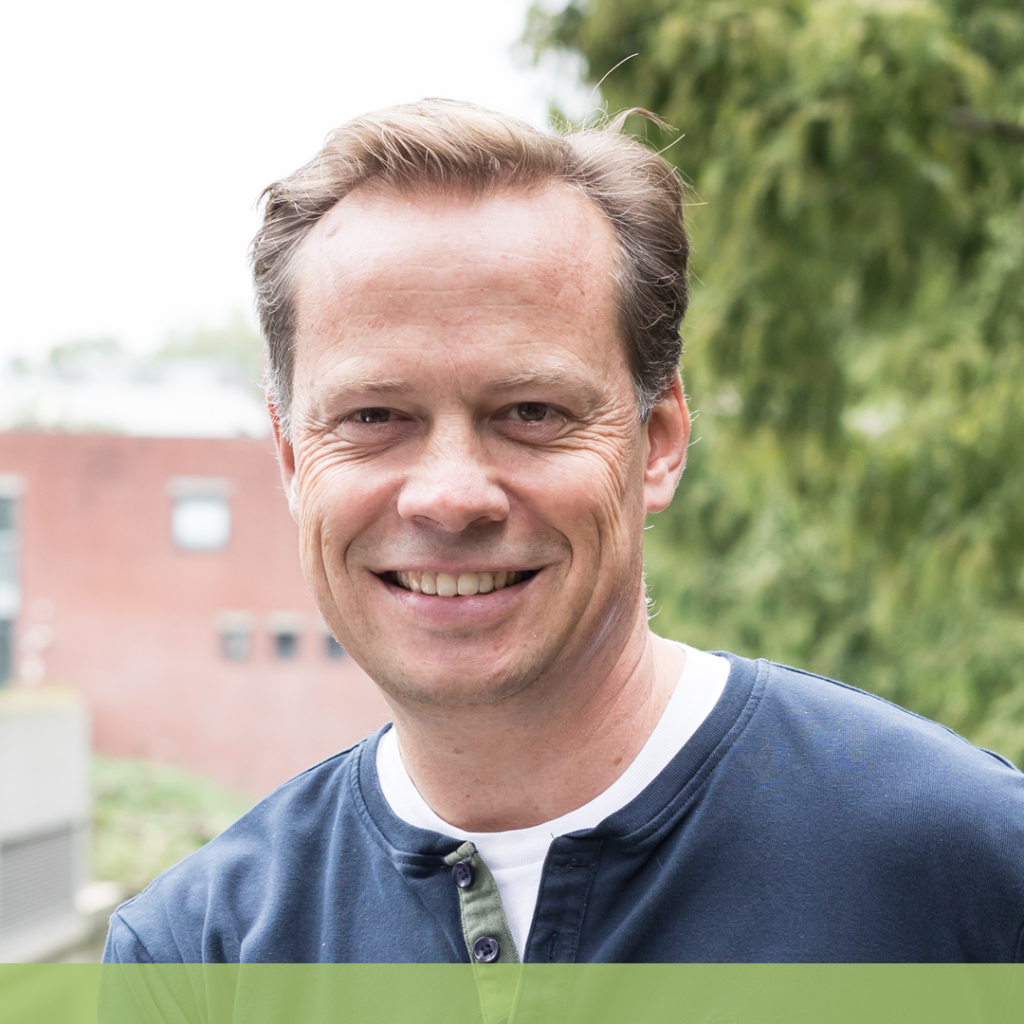
The story of Manuel & his innovation ‘sweet spot’
This week, the spotlight is on Manuel van Lijf. He has been an entrepreneur since 2021 and works as a freelancer as part of the consultancy Nlmtd. Nlmtd is a new consultancy model with a forward-thinking approach. They believe in doing business together. Entrepreneurs with different areas of expertise join forces to make a positive impact on the business world together. This impact focuses mainly on four themes: sustainability, the energy transition, the food transition and digitalisation.
To achieve sustainability, you need innovation
Manuel has built up 20 years of international work experience in a range of roles, all of which gave him an outlet for his drive to make an impact and his passion for innovation; much of that experience was gained in sectors such as aviation, and in parts of the world such as the Middle East, that aren’t necessarily known for their contributions to sustainability. And yet, for him, it felt only natural to now commit himself fully to sustainability. “I find it hard to put into words why it was, and still is, so natural for me. Maybe because I have children? Or it’s the momentum I feel around me, but I believe this is where I can, and must, make a difference now. I don’t mind which area of sustainability it’s about. After all, to achieve sustainability, you need innovation. And innovation is, and always will be, the ultimate sweet spot for me.”
As a family, we go along with what’s normal right now
There’s a lot of attention on the role governments and businesses need to play in becoming more sustainable, and very little on the role consumers need to take on. What trade-offs do entrepreneurs with a heart for sustainability make as consumers? Which sustainable products or services do they buy? Do they also buy sustainable clothing or sustainable gifts, for example? In short, how do they strike the balance as consumers when it comes to making a positive social, environmental and financial impact?
Manuel thinks he’s pretty average, but would like to be a bit more ambitious when it comes to making more sustainable choices as a consumer. “As a family, we also go along with what’s normal right now. I’m no sustainability lifestyle expert, but as a family with two teenagers we simply pay attention to it. Paying attention to how you drive, how you use energy, what you eat, and always weighing up the cost against the sustainability of products and services. As a freelancer with a family, I also have to keep weighing up whether something makes financial sense, because my income varies. I’d like to be more ambitious than I am now when it comes to consuming sustainably, and I am working on it, but it’s mainly practical considerations that have kept me from taking that step so far.
For example, I’ve had my house insulated, and I’d also like solar panels, but my roof isn’t suitable for them (too small, too steep and north-facing). But why should they have to be on my roof? Maybe I could take part in a solar project somewhere else? I currently drive a plug-in hybrid, a Lynck & Co, on a subscription. That model suits me really well as a freelancer because you can cancel it monthly, and as soon as the subscription is also available for an electric car, I’ll definitely switch.
I’d also like to do something to eat more sustainably. But with two teenagers at home, that would mean cooking several different meals each time, and that’s not really doable at the moment.”
So much is possible now when it comes to becoming more sustainable, on both the technical and the production side. There’s momentum in politics and in society. It really is possible to make a business ‘sustainable by design’. I hope that in a few years we won’t be talking about this any more, simply because every business will be that by definition.
Manuel van Lijf
Two big challenges that call for a focus on the long term, culture & leadership
According to Manuel, there are two big challenges for sustainable entrepreneurs in general; both call for a focus on long-term vision, culture & leadership.
Sustainability as a marketing tool vs. a purpose carried by a culture
“Maybe it’s stating the obvious, but what you see at a lot of companies is that they’re too quick to claim they’re sustainable, in other words, they ‘greenwash’. It has become a marketing tool instead of a purpose carried by a culture. At these companies you see a mismatch between how much they communicate about sustainability, the time and resources they actually invest in it, and the impact they make with it. There are plenty of examples of companies that invest only a relatively small share of their time and resources in sustainability, yet keep talking about it in most of their communications.
More impact through “sustainability by design”
If you really want to make an impact, you have to look beyond how sustainable your end products are. You also have to dare to look at the sustainability of your business model, all your investments, your entire value chain, all your processes, and so on. You need to create an active culture of sustainability within a company. That then has to be carried through into every aspect of your business: strategy and policy, purchasing materials, all core and support processes, and so on. That takes staying power and an enormous amount of consistency and discipline from people. What I’ve seen at many companies is that sustainability often starts with a sustainability manager or department, but, however silly it sounds, if you don’t have a leader who dares to keep making it a hard requirement in every decision, the impact will always remain limited. In short, you have to strive for “sustainable by design”, for example by giving sustainability feasibility just as much weight as financial feasibility. So much is possible now when it comes to becoming more sustainable, on both the technical and the production side. There’s momentum in politics and in society. So it really is possible to make a business ‘sustainable by design’. But there is a big challenge for leadership: how do you make sustainability a fixed, long-term part of your company culture, and ensure it’s felt and carried through consistently and continuously in every aspect?”
We’re eco-dreamers. Are you?
More eco-dreams.
Read the other stories in our series, or tell us about your own eco-dream.